Mansehra News Daily | Serving the Hazara Region

Mansehra News Daily

The Voice of the Hazara Region Since 1998

Breaking Karakoram Highway repair works scheduled to begin next week near Balakot — Local authorities announce new agricultural subsidies for Hazara farmers — District hospital opens new pediatric wing...
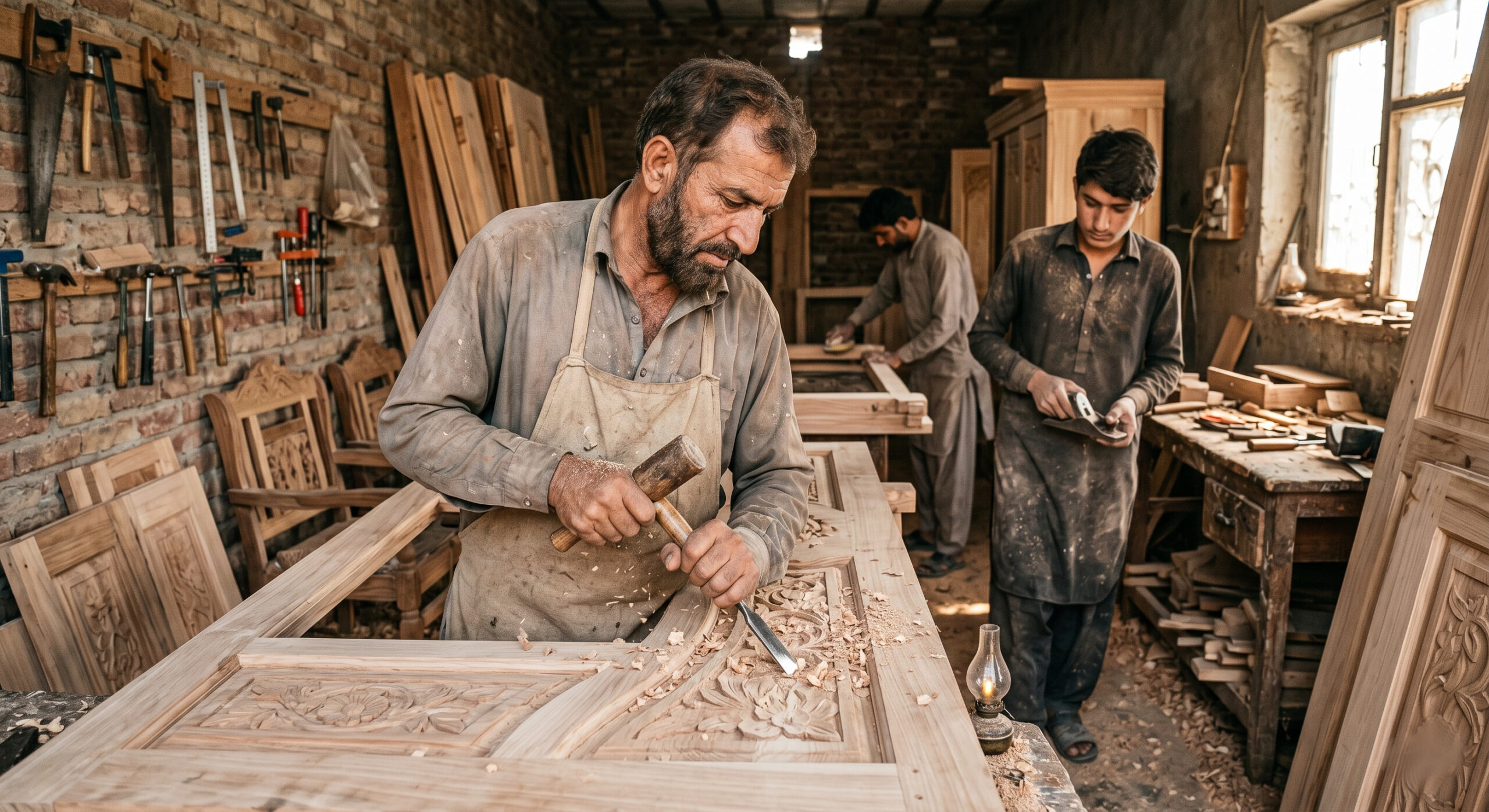
Local Carpenter Rashid Khan in his workshop
Cover Story
Local Craftsmanship 5 min read

Local Carpenter Keeps Traditional Woodwork Alive as Demand for Handmade Furniture Grows

FA

By Fawad Ali

Published: April 23, 2026

Mansehra. In a narrow workshop near the main bazaar of Mansehra, the sound of chisels, saws and sanding tools has remained almost unchanged for more than three decades. For 52-year-old carpenter Rashid Khan, woodwork is not only a source of income, but a skill passed down through his family.

Khan began working in his father’s workshop as a teenager. At first, he only cleaned tools and carried wooden planks. Later, he learned how to make doors, beds, cabinets and traditional carved frames used in homes across the Hazara region.

Today, despite the availability of cheaper machine-made furniture, Khan says many families still prefer handmade pieces, especially for weddings, new houses and long-term household use.

“Machine furniture is quick, but handmade work has strength and character. People come here because they want something that lasts.”

According to Khan, the cost of timber has increased significantly in recent years, making the business more difficult. Customers often compare prices with factory-made furniture, but he says the difference becomes clear after several years of use.

His workshop currently employs three young workers from nearby areas. They are learning cutting, polishing, fitting and basic carving. Khan believes local crafts can still provide employment if young people are willing to learn patiently.

One of his recent customers, a schoolteacher from Mansehra, said he ordered a handmade study table because he wanted something simple and durable. “It may cost a little more, but the quality is better,” he said.

Khan hopes that traditional carpentry will not disappear from the city. He says local markets should support skilled workers, especially those who train young people and keep old methods alive.

“Every city has its own skills,” Khan said. “In Mansehra, people know hard work. If these skills are respected, they can feed many families.”

For now, his small workshop continues to operate six days a week, serving customers who still value careful hands over fast production.
Muhammad Adeel working on a motorcycle
Innovation

Young Mechanic from Oghi Turns Old Motorcycles into Affordable Work Vehicles

By Zara Ahmed • 4 min read

In a small workshop on the edge of Oghi, 27-year-old Muhammad Adeel starts every morning surrounded by oily tools, used spare parts...
Read Full Story →
Retired teacher Abdul Rahman teaching kids
Community

Retired Teacher Opens Free Evening Classes for Children in Rural Village

By Tariq Mahmood • 3 min read

In a quiet village outside Mansehra, retired schoolteacher Abdul Rahman has turned one room of his home into a small evening classroom...
Read Full Story →
Imran Shah at his bookstall
Books & Learning

Small Bookstall Owner Sees Growing Interest in Exam Preparation Guides

By Sana Tariq • 3 min read

A small bookstall near Mansehra’s main market has become a regular stop for students preparing for board exams, entry tests, and government job applications...
Read Full Story →
Tailor Nadeem Iqbal working
Local Trade

Local Tailor Finds New Customers Through School Uniform Season

By Kamran Ali • 4 min read

As the new school term approaches, a small tailoring shop in Mansehra’s main bazaar has become busy with parents bringing fabric, measurements...
Read Full Story →
Honey jars in a small shop
Agriculture

Local Honey Seller Builds Small Business from Mountain Beekeeping

By Bilal Khan • 3 min read

In a small shop near the roadside outside Mansehra, jars of golden honey are stacked neatly on wooden shelves. The shop belongs to Tariq Mehmood...
Read Full Story →

Continue Reading

Innovation & Mobility

Young Mechanic from Oghi Turns Old Motorcycles into Affordable Work Vehicles

ZA

By Zara Ahmed

Published: April 23, 2026

Muhammad Adeel working on a motorcycle
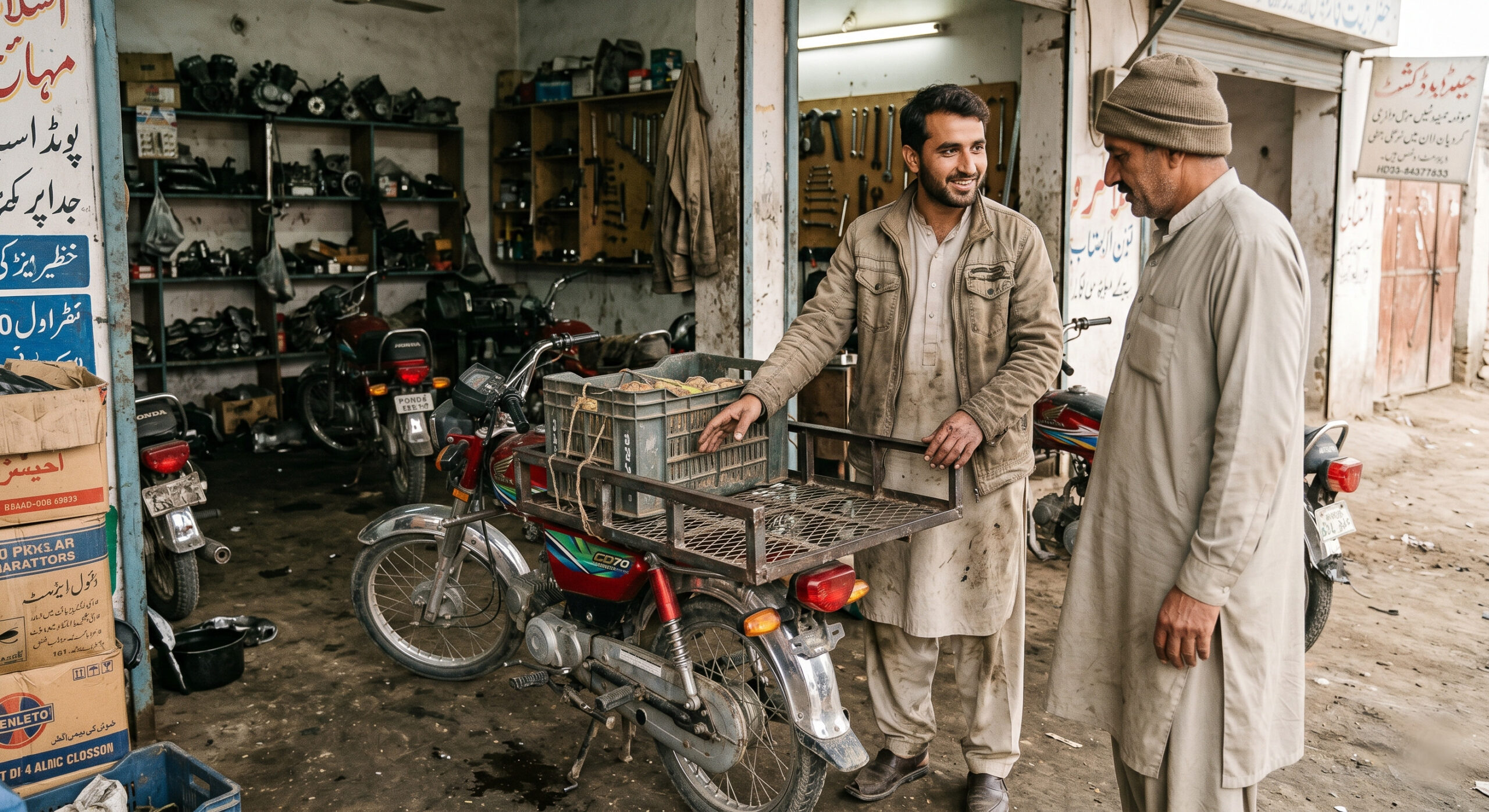
Muhammad Adeel (27) explains his motorcycle conversion to a local trader outside his workshop in Oghi.

Mansehra/Oghi. In a small workshop on the edge of Oghi, 27-year-old Muhammad Adeel starts every morning surrounded by oily tools, used spare parts, and half-repaired motorcycles. What many people see as scrap, he sees as opportunity.

For the past few months, Adeel has been converting old motorcycles into simple, durable work vehicles for traders, farmers, and delivery workers across the Mansehra region.

The idea began when a neighbor wanted to sell his old motorcycle because it was no longer considered worth repairing. Adeel took the bike apart, repaired the engine, strengthened the rear frame, and added a small cargo platform. A few days later, the neighbor was using it again to transport fruit crates to the local market.

“Many people here cannot afford a new vehicle,” Adeel said. “But often, an old motorcycle only needs some work before it becomes useful again.”

Customers now come to his workshop from Oghi, Shinkiari, and even Balakot. His conversions are especially popular among milk suppliers, vegetable sellers, and mobile craftsmen. Adeel keeps the vehicles simple, avoiding expensive parts and unnecessary technology so they can be repaired easily in small local workshops.

One of his best-known vehicles is now used by an elderly tea seller near Mansehra. In the past, he carried his equipment by hand or hired transport when he could. Today, he travels from village to village on a converted motorcycle fitted with a small stove, water containers, tea kettles, and cups.

“Since I got this vehicle, I earn more and can reach more places. For me, this is not just a motorcycle. It is my business.”

Adeel does not describe his work as a major invention. For him, it is about practical solutions for everyday life. Still, he hopes to expand his workshop and train two young men from the area.

“There are many skilled people in Mansehra,” he said. “You do not always need big factories. Sometimes, a good idea, tools, and someone willing to work are enough.”

For many customers, Adeel’s workshop has already become more than a repair shop. It is an example of how local craftsmanship can help people become more independent — with simple means and direct value for daily life.

Innovation Oghi Transportation
Education & Community

Retired Teacher Opens Free Evening Classes for Children in Rural Village

TM

By Tariq Mahmood

Published: April 22, 2026

Retired teacher Abdul Rahman teaching kids
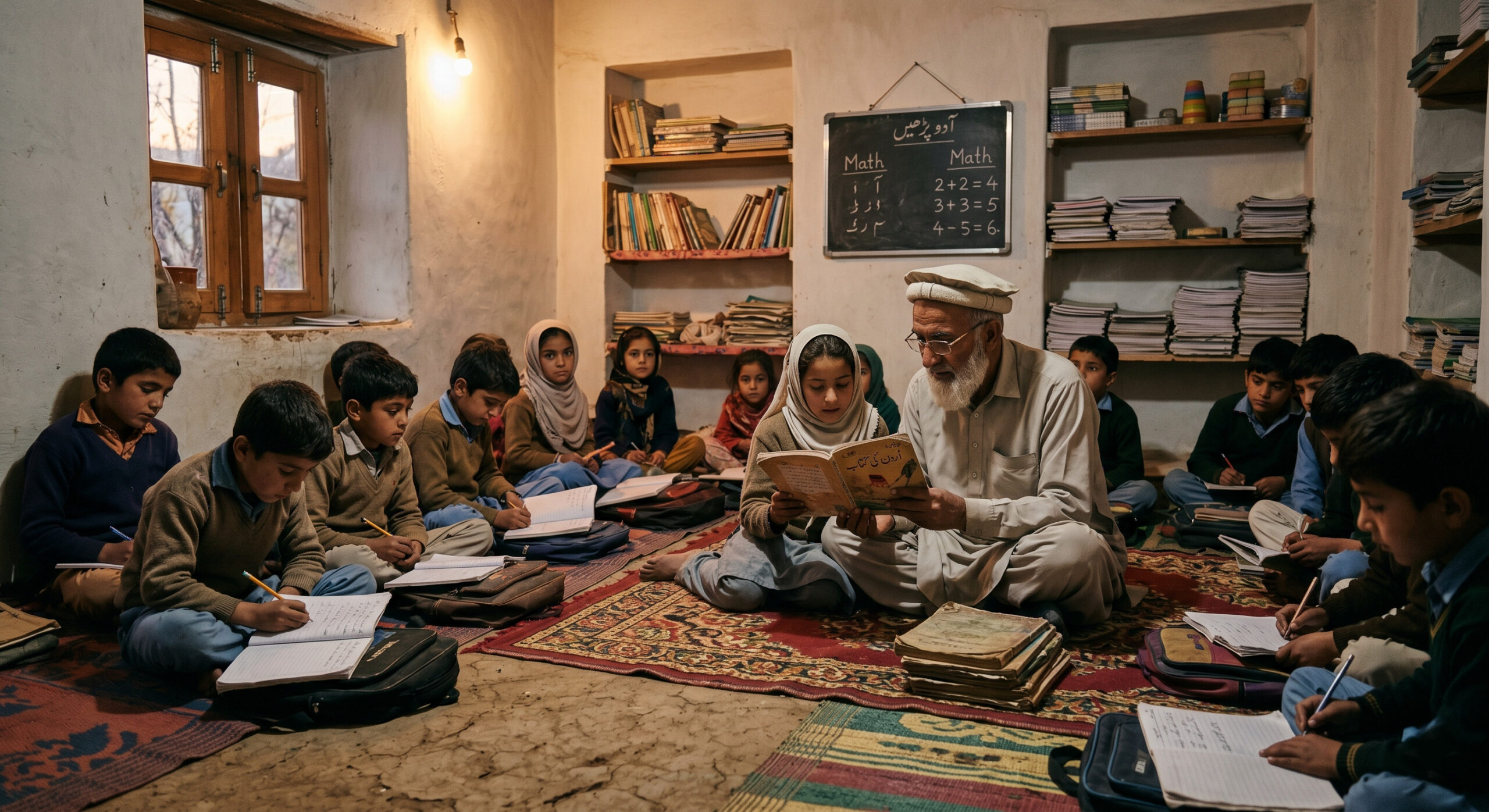
Abdul Rahman (64) conducts his daily free evening classes in a spare room of his village home.

Mansehra. In a quiet village outside Mansehra, retired schoolteacher Abdul Rahman has turned one room of his home into a small evening classroom for children who need extra support with their studies.

Every day after Asr prayer, children from nearby houses arrive with notebooks, schoolbags, and worn textbooks. Some sit on benches, others on mats spread across the floor. There is no school sign outside, no formal registration, and no fee.

Rahman, now 64, began the classes after noticing that many children in the area were struggling with basic reading, writing, and mathematics. Some had missed school because of family responsibilities. Others attended school regularly but needed more attention than crowded classrooms could provide.

“I spent my life teaching,” Rahman said. “After retirement, I did not want to sit idle. If a child learns to read properly, it can change the direction of his whole life.”

The evening classes started with only three students. Today, more than 20 children come regularly. Rahman teaches Urdu, English, mathematics, and basic general knowledge. Older students help younger ones, especially during exam season.

Parents in the village say the classes have made a visible difference. Several children who once avoided schoolwork now complete their homework with more confidence. Some have improved their exam results within just a few months.

One mother said her son used to struggle with reading English sentences. “Now he reads signboards and small paragraphs by himself,” she said. “For us, this is a big thing.”

Rahman does not ask for money, but villagers sometimes bring tea, notebooks, pencils, or firewood during winter. He says that is enough.

His next goal is to collect more books and create a small corner library for the children. He believes many students in rural areas do not lack intelligence, but lack guidance and regular support.

“These children are capable. They only need time, patience, and someone who believes education matters.”

In a region where many families face financial pressure, Rahman’s small classroom has become a quiet example of community service — simple, local, and deeply practical.

Education Community Service Rural Development
Books & Learning

Small Bookstall Owner Sees Growing Interest in Exam Preparation Guides

ST

By Sana Tariq

Published: April 22, 2026

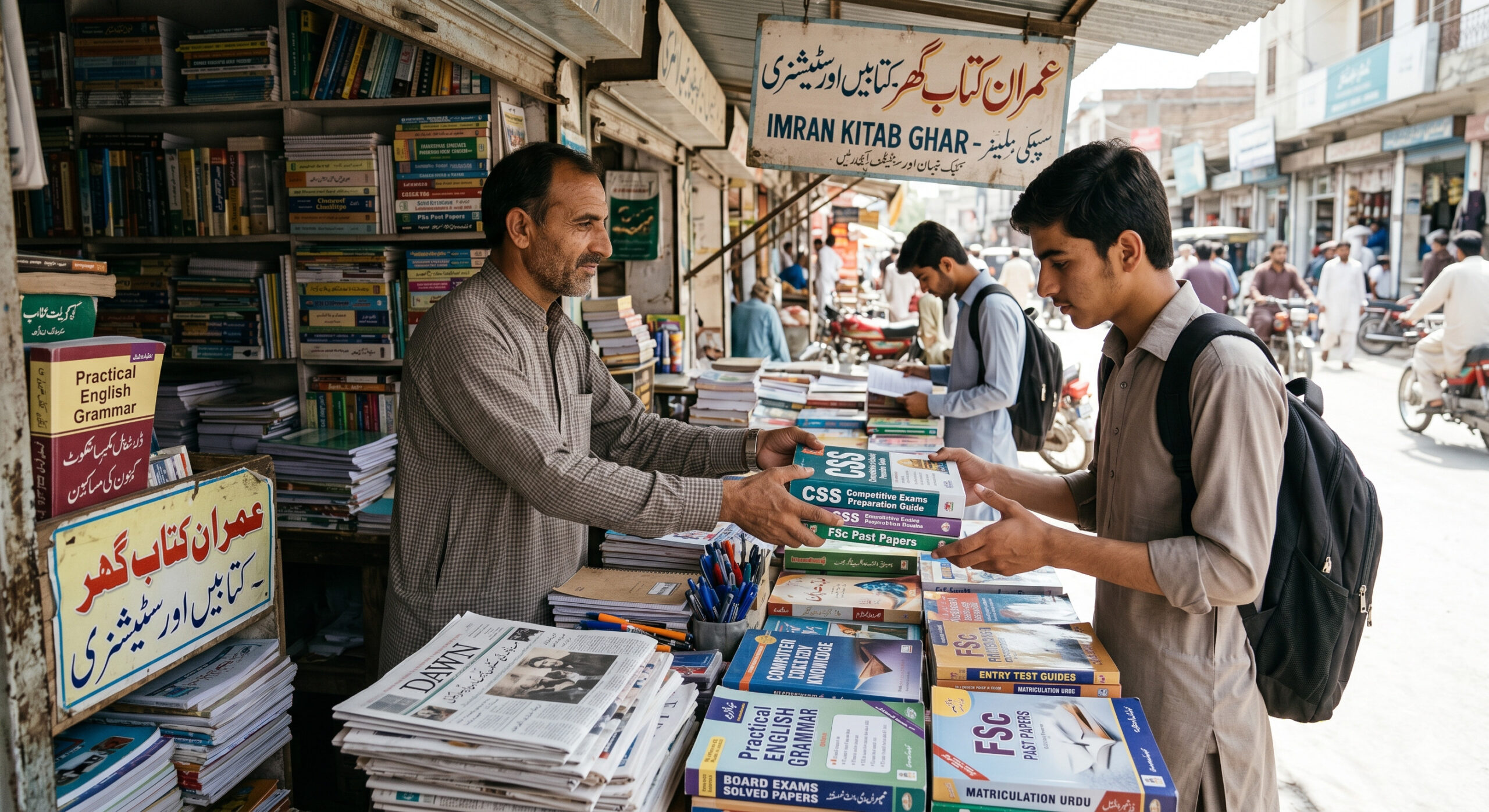
Imran Shah at his bookstall
Imran Shah (46) arranges educational guides at his roadside stall near Mansehra's main market.

Mansehra. A small bookstall near Mansehra’s main market has become a regular stop for students preparing for board exams, entry tests, and government job applications.

The stall is run by 46-year-old Imran Shah, who has sold books, notebooks, newspapers, and stationery in the same area for more than 18 years. What began as a modest roadside setup has slowly turned into a familiar place for students looking for affordable study material.

According to Shah, demand has changed noticeably in recent years. While school textbooks and notebooks remain common purchases, more young people now ask for exam preparation guides, past papers, English grammar books, and basic computer knowledge material.

“Earlier, students mainly came for school books,” Shah said. “Now many ask about jobs, tests, English, and interview preparation. They want something that can help them move forward.”

Several students visit the stall after college hours to check new arrivals or ask which books are useful for upcoming exams. Shah says he often keeps second-hand copies as well, because many families cannot afford new books every time.

One college student from the area said the stall is useful because it saves time and money. “If we go to bigger cities, it costs more. Here we can find basic material locally,” he said.

Shah believes that education remains one of the strongest priorities for families in Mansehra, even where income is limited. Parents may delay other purchases, he says, but many still try to buy books for their children.

The stall owner now hopes to expand his collection with more books on English speaking, computer skills, and competitive exam preparation. He also wants to create a small section for used books, where students can sell or exchange study material.

“For many students, even one good book can make a difference,” Shah said. “If they find the right material at the right time, it helps them prepare better.”

In a busy market filled with shops, vendors, and traffic, the small bookstall remains a quiet reminder that local businesses can still play an important role in education.

Education Books Local Business
Local Trade

Local Tailor Finds New Customers Through School Uniform Season

KA

By Kamran Ali

Published: April 21, 2026

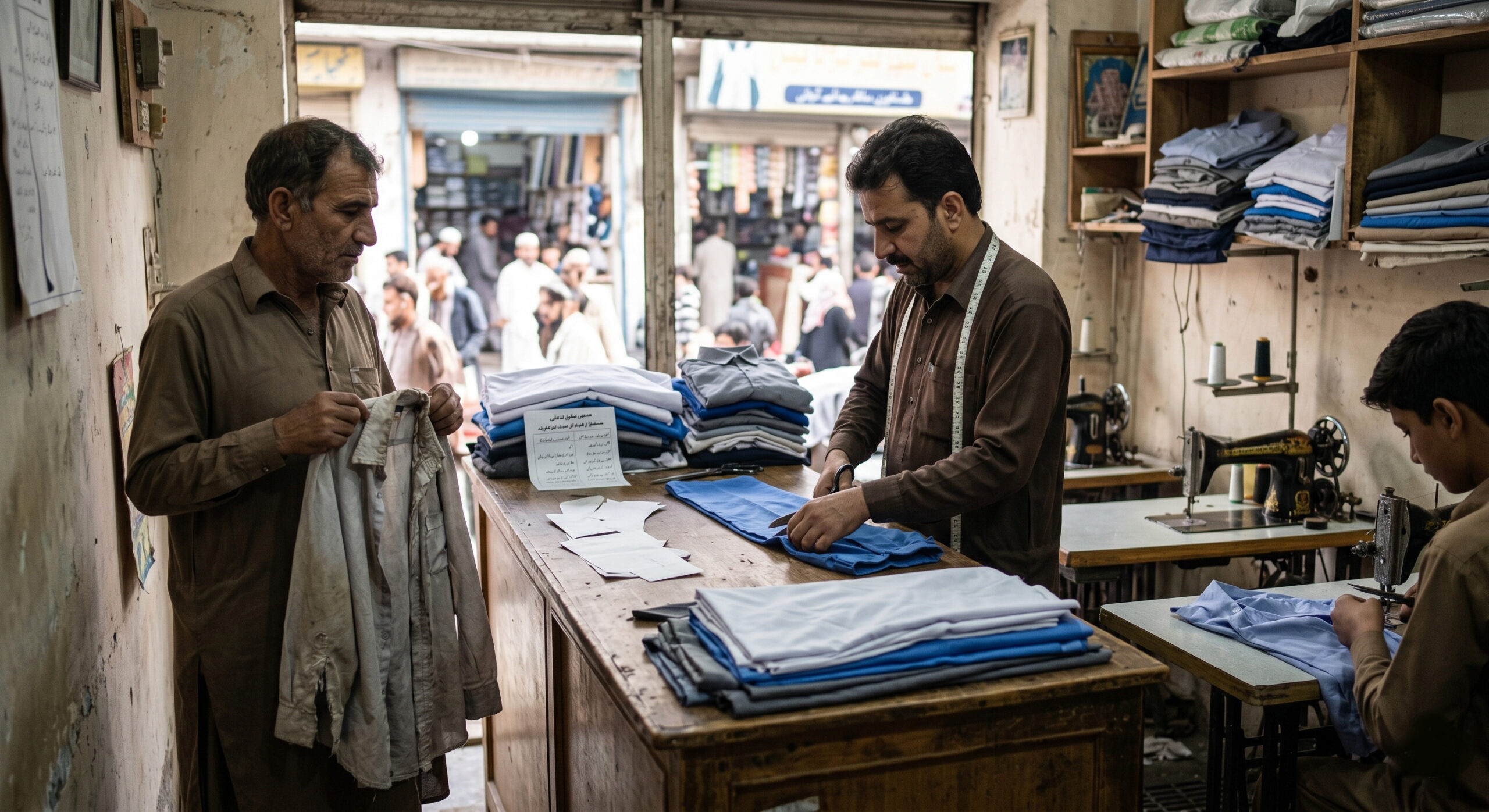
Tailor Nadeem Iqbal working
Nadeem Iqbal prepares school uniforms ahead of the new academic term in his busy tailoring shop.

Mansehra. As the new school term approaches, a small tailoring shop in Mansehra’s main bazaar has become busy with parents bringing fabric, measurements, and old uniforms for repair.

The shop is run by 41-year-old Nadeem Iqbal, who has worked as a tailor for nearly two decades. During most of the year, he stitches shalwar kameez, trousers, waistcoats, and simple daily wear. But before the school season begins, his work changes almost completely.

For several weeks, school uniforms become his main business. Parents come with lists from schools, asking for shirts, trousers, dupattas, belts, and minor alterations. Some bring older uniforms from elder children and ask him to adjust them for younger siblings.

“Many families try to save money where they can,” Iqbal said. “If an old uniform can be repaired or resized, it helps them.”

According to local parents, rising costs have made tailoring decisions more practical. Some prefer buying ready-made uniforms, while others say stitched uniforms last longer and fit better. Iqbal says both options have customers, but many families still trust local tailors for proper fitting.

One father at the shop said he brought two old uniforms for alteration instead of buying new ones. “Children grow fast, and everything is expensive now,” he said. “If the tailor can make it usable again, that is better.”

The busy season also creates temporary work for young helpers, who assist with cutting threads, ironing clothes, and delivering finished uniforms to nearby homes.

Iqbal says he hopes to expand the shop slowly, but for now he is focused on completing orders before schools reopen.

“Uniform work is not glamorous,” he said. “But it is important. Every child needs to go to school properly dressed.”

In Mansehra’s crowded bazaar, his small shop reflects a common reality: local trades survive by adapting to the seasonal needs of ordinary families.

Tailoring School Season Local Trade
Agriculture

Local Honey Seller Builds Small Business from Mountain Beekeeping

BK

By Bilal Khan

Published: April 20, 2026

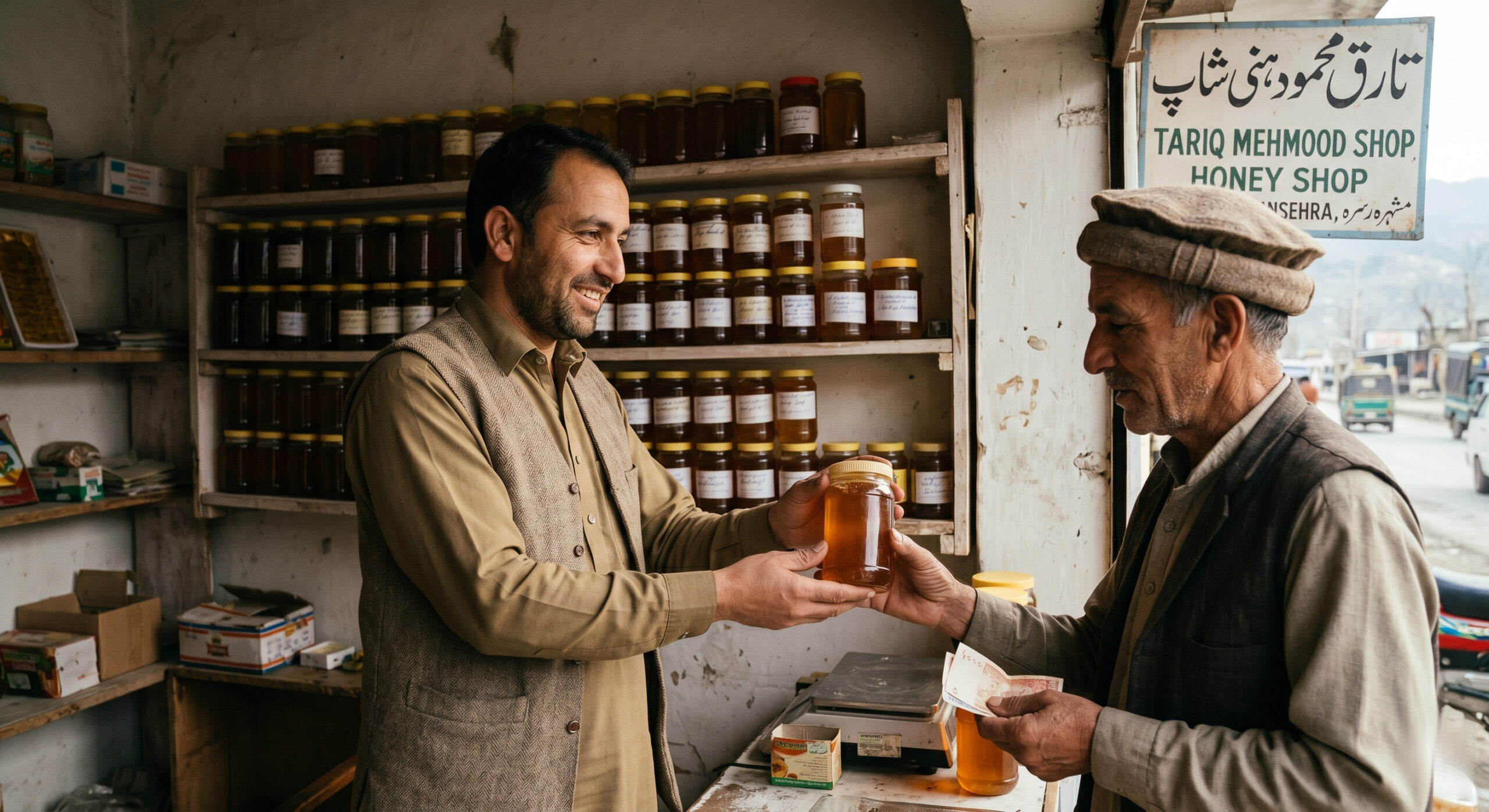
Honey jars in a small shop
Freshly harvested golden honey displayed in Tariq Mehmood's shop outside Mansehra.

Mansehra. In a small shop near the roadside outside Mansehra, jars of golden honey are stacked neatly on wooden shelves. The shop belongs to 38-year-old Tariq Mehmood, a local honey seller who has spent the past several years working with beekeepers from nearby mountain areas.

Mehmood says his business began modestly. At first, he bought small quantities of honey from relatives in rural areas and sold them to neighbors and shopkeepers. Over time, regular customers began asking for larger amounts, especially during winter.

“People here trust local honey more than factory-packed products,” he said. “They want to know where it comes from.”

According to Mehmood, demand is strongest from families who buy honey for daily use, tea, breakfast, and traditional home remedies. Some customers also send jars to relatives in other cities.

The work is seasonal and depends heavily on weather conditions. If rainfall is too heavy or flowering is weak, production can fall. Transport from remote areas can also be difficult, especially during colder months.

One customer from Mansehra said he prefers buying from local sellers because the product feels more reliable. “When you know the person selling it, you can ask questions,” he said. “That matters.”

Mehmood now hopes to improve packaging and add simple labels with the source area, weight, and contact number. He believes better presentation could help small local sellers compete with larger brands.

“There is good honey in this region,” he said. “But if we want to sell outside Mansehra, we need proper packing and trust.”

For now, his shop remains small, but steady. In a district known for its hills, valleys, and rural production, local honey continues to offer a practical source of income for families connected to beekeeping.

Beekeeping Agriculture Small Business